Arabic Labeling Requirements UAE: Fix 30 Common Misses
Arabic labeling requirements for UAE approvals: 30-item checklist covering Arabic-English layout, dates, warnings, ingredients, and dossier matching issues.
1/5/20264 min read
Arabic Labeling Requirements in the UAE
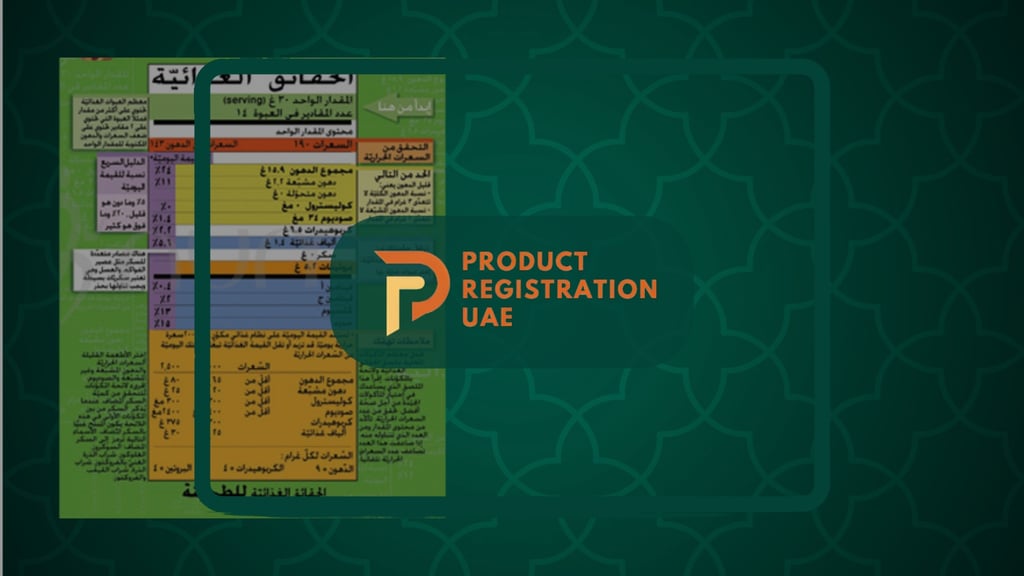
Arabic labeling requirements UAE are one of the most frequent causes of approval delays, objections, and repeat submissions across cosmetics, food, supplements, and personal care products.
These issues rarely stem from missing translations alone. In most reviews, delays occur because Arabic artwork, product classification, and dossier data are not perfectly aligned.
From a regulatory perspective, labels function as compliance evidence.
Authorities rely on them to verify how a product is presented to consumers, how it is classified, and whether claims remain within the approved scope. When labels and dossiers tell different stories, reviews slow down.
This guide reflects common review patterns observed across UAE authorities and focuses on preventing rework by addressing the items most often flagged during technical assessment.
Why Arabic Labeling Is Strictly Enforced
Arabic labeling is enforced as part of consumer protection and product traceability obligations in the UAE.
Authorities expect consumers to clearly understand product identity, usage, risks, and composition without relying on external explanations or foreign-language interpretation.
Equally important, Arabic labels are used by reviewers as a cross-check against portal submissions and technical dossiers.
Inconsistent terminology, quantities, or claims often trigger clarification requests, even when translations are linguistically correct.
Retailers and distributors increasingly apply the same standards, treating Arabic labeling compliance as a prerequisite for onboarding and continued listing.
What Authorities Expect (In Practical Terms)
During review, authorities look for three fundamentals:
Clear, complete, and legible Arabic information
One consistent version of information across artwork, dossier, and portal
Claims limited strictly to what can be supported by documentation
Any mismatch—terminology, quantities, origins, or claims—raises questions that delay approval.
The Most Commonly Missed Arabic Label Items (Pre‑Submission Checklist)
Use this checklist as a final quality-control step before uploading artwork. If any item is unclear, incomplete, or inconsistent, address it before submission.
A) Product Identity and Traceability
An Arabic product name that accurately reflects classification and use
Brand owner name exactly as registered with authorities
Importer or distributor details, where applicable
Country of origin clearly stated
A batch or lot number that is readable and traceable
Manufacturing and expiry or best‑before dates using an acceptable UAE format
B) Net Contents and Intended Use
Net quantity displayed in metric units with Arabic and English
Clear statement of intended use or function in Arabic
Directions for use are translated fully, including frequency and duration
Storage conditions are written clearly in Arabic
Consumer contact details or a resolving QR code
C) Ingredients and Allergen Disclosure
Full ingredient list in the correct order for the product category
INCI names maintained in Latin script, with Arabic headers
Accurate allergen disclosure where required
Declaration of animal‑derived ingredients when relevant
Alcohol content or origin disclosed when applicable
Flavour or fragrance terminology aligned with dossier entries
D) Warnings and Claims
Mandatory safety warnings included in Arabic
Age or usage restrictions stated where applicable
Cosmetic and personal care claims kept non‑therapeutic
Certification marks used only when valid and documented
Risk‑related guidance included where product use requires it
E) Typography and Layout
The Arabic font size is large enough for normal retail reading distance
Strong contrast between text and background
Logical panel hierarchy for critical information
No over‑stickering that hides required content
Barcodes or QR codes positioned away from mandatory text
F) Consistency With the Dossier and Portal
Ingredient names and order are identical across artwork and dossier
Net content, origin, and brand details aligned 1:1 with portal data
Claims appear only if supported by the dossier
Date formats are consistent across all packaging levels
Version control applied to artwork files for traceability
Quick Arabic Label QA Flow (Before Upload)
Before submission, run a structured check:
Bilingual review to confirm accurate Arabic translation
Line‑by‑line comparison against the dossier and portal draft
Risk scan for claims, allergens, alcohol, and animal‑derived inputs
Physical print test to confirm legibility and layout
Final version sign‑off recorded for change control
This process often prevents weeks of avoidable review cycles.
Why Labels Fail Even When Translations Are Correct
Many objections arise from regulatory alignment issues rather than translation errors.
A product may be described accurately in Arabic yet classified incorrectly, or a claim may be factually correct but unsupported by the approved dossier.
Reviewers assess labels as part of a complete regulatory file.
When artwork introduces claims, ingredient descriptors, or usage instructions that extend beyond what is documented, authorities typically request revisions or additional justification.
This is why labeling should be treated as a controlled regulatory document, not a design deliverable.
Handling Small or Limited Packaging
For very small units, such as vials or samples, outer packaging or leaflets may be used to carry full Arabic information. However, basic identifiers must still appear on the primary pack.
Planning the packaging hierarchy early helps avoid last‑minute redesigns.
Regulatory Outlook and Ongoing Compliance
Arabic labeling requirements UAE continue to be enforced through consistency checks rather than isolated translation review.
As regulatory systems become more documentation-driven, authorities increasingly expect labels, dossiers, and portal entries to function as a single, coherent record.
Brands that establish internal label governance, version control, and routine compliance checks adapt more easily to regulatory updates and inspection trends without repeated redesigns.
Final Takeaway
Arabic labeling requirements UAE are not about language alone.
They are about accuracy, alignment, and traceability across the full regulatory file. Businesses that treat labels as part of their compliance system, supported by documented controls and internal review, reduce objections, shorten approval timelines, and maintain long-term market access.
Recommended Reads
Government Approvals Support in the UAE
Regulatory Consulting Services in the UAE
Halal Certification for Cosmetics in the UAE
See our guide to post approval variations in the UAE.
If you’re preparing labels now—or fixing objections—our team can pre‑screen Arabic artwork, align dossier and portal data, and draft responses that clear reviews quickly.
Contact Us or Use the chatbot in the corner to share your artwork, and we’ll run a rapid label QA before you submit.